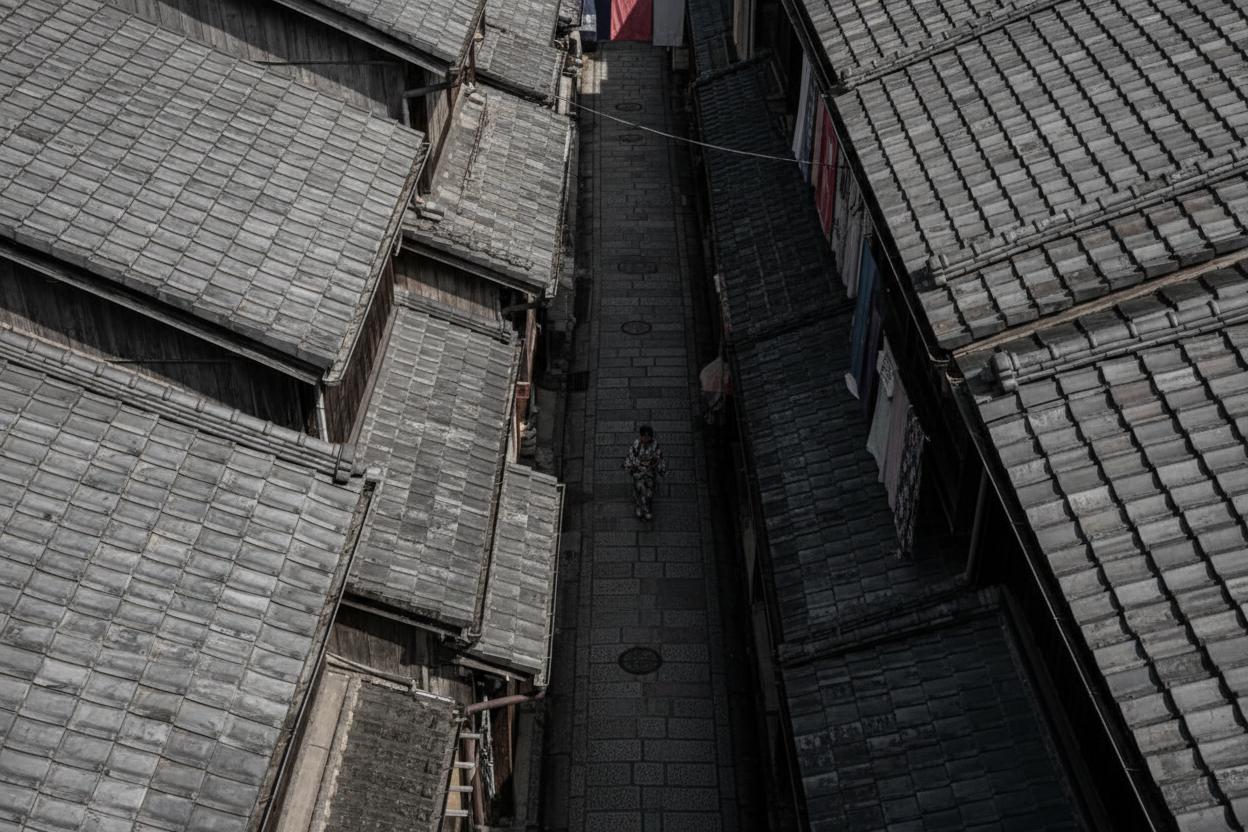
Nishijin streets are 1.5 meters wide because a standard silk bolt is 40 centimeters across, and three bolts laid side by side make 1.2 meters. You needed a little extra space to walk past. That is how they dried the silk.
The streets were never meant for vehicles. They were designed for silk. When it rained, workers would carry the bolts inside and the streets would empty completely. That is why the buildings have such wide interior corridors.
Today the silk production is a fraction of what it was. But the street widths are protected by heritage law. You cannot widen them. You cannot even add a sign that protrudes. The looms that remain are behind the same wooden facades.
If you walk these lanes at 7am you will hear the looms before you see them. The sound has not changed in a hundred years. The rhythm is specific to Nishijin — a shuttle speed that other weaving districts do not use.